

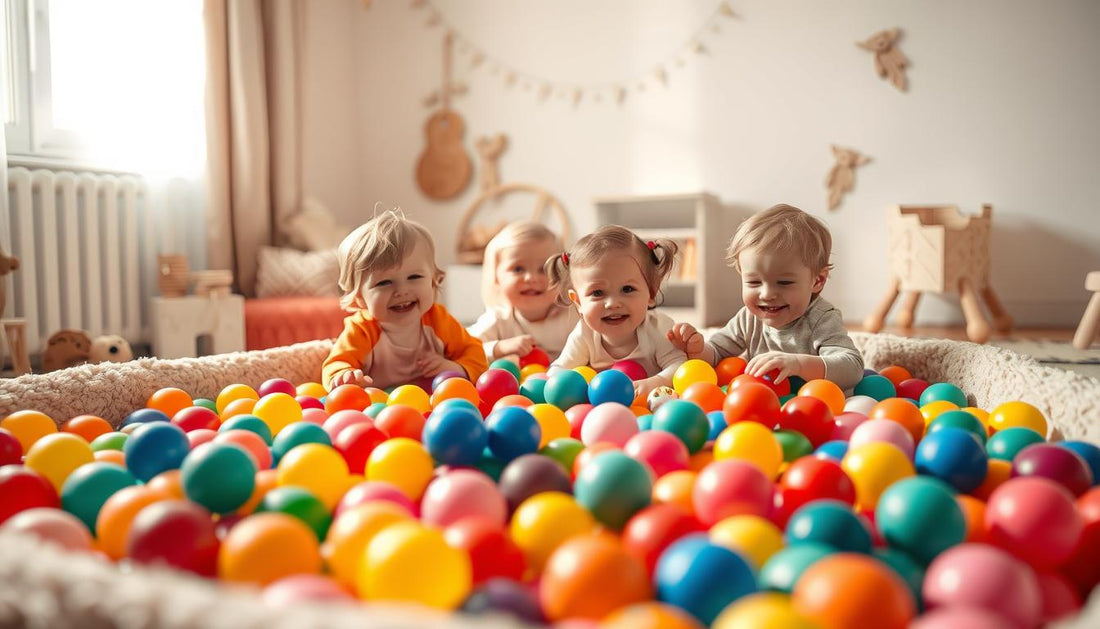
How to Make a Sensory Ball Pit Safely at Home
Share
Quick answer: To turn a ball pit into a sensory space, change one thing at a time: dim the room and add a battery light outside the pit, mix in a few balls of a different colour, put fabric squares or a textured mat around the edge, and add calm sounds such as a rainstick. Avoid anything small enough to swallow, string lights or cables inside the pit, scented products, water beads and heat. Watch your child and stop if they seem overwhelmed.
A plain ball pit is already a sensory experience: balls press gently against the body, clatter when they move and give a child a lot to look at. With a few small changes it can become a calm sensory corner at home or in a nursery. At Soft Play Market we get asked what's safe to add and what isn't, so this guide covers both. If you're looking for sensory-room equipment for a setting, see our guide to sensory room equipment.
What makes a ball pit a sensory experience?
- Touch and deep pressure. Being surrounded by balls gives an even, gentle pressure that many children find soothing.
- Body awareness. Moving through balls tells a child where their arms and legs are, because everything pushes back a little.
- Sight. Colour, light and movement.
- Sound. The soft rattle of balls moving.
Some children seek this kind of input and want to dive in. Others find it too much at first and prefer to sit on the edge. Our guide to soft play for sensory-seeking children goes into this in more depth.
How can you use lighting safely?
- Dim the main light or close the curtains for a calmer feel.
- Place a battery-powered colour-changing lamp on a shelf outside the pit, out of reach.
- Use white or pastel balls, which pick up coloured light better than dark ones.
- A torch game works well: shine a soft torch beam across the balls and let your child "catch" it.
Avoid: fairy lights or LED strips inside the pit (cables and batteries are a strangling and swallowing risk), plug-in lamps within reach, and fast flashing lights, which some children find distressing.
How do you add textures?
- Lay fabric squares (velvet, corduroy, faux fur, cotton) on the floor around the pit for barefoot exploring.
- Add a few large soft toys or fabric books into the pit to find.
- Choose a pit cover your child enjoys touching. Bouclé, velvet and corduroy all feel different; see our ball pits.
- Add a textured foam mat next to the pit, such as a 120x120cm foldable play mat (about £179).
Avoid: rice, beans, pasta, pom-poms, small sensory balls or water beads anywhere near a ball pit. They get lost among the balls and are choking hazards. Water beads in particular are dangerous if swallowed.
Which sounds work?
- A rainstick or ocean drum played gently by you outside the pit.
- Quiet music or white noise from a speaker on a shelf.
- Large soft toys with crinkle panels or bells sewn safely inside.
Keep volume low. The point is a calm space, not more noise.
How do colours change the feel?
Bright mixed colours feel lively and are good for active play and colour games. Muted colours such as white, grey, beige and pastel feel calmer and suit a quiet corner. You can change the feel by swapping the balls: our balls come in single-colour boxes of 750 (£142.50) or an 800 mixed-colour pack (£178.80). The bulk balls page shows every colour.
What should a sensory ball pit set-up look like?
| Element | Safe choice | Avoid |
|---|---|---|
| Light | Battery lamp on a high shelf, dimmed room | String lights, cables or flashing lights in or near the pit |
| Texture | Fabric squares around the pit, soft toys, textured mat | Rice, beads, water beads, small loose parts |
| Sound | Rainstick, quiet music from a shelf | Loud toys, toys with button batteries |
| Smell | None | Diffusers, scented sprays on the balls |
| Balls | 7cm balls, at least 6cm for under-3s | Mixed sizes, cracked or dented balls |
How do you know if it's too much?
Signs that a child is overwhelmed include covering ears or eyes, crying, freezing, climbing out repeatedly or becoming more and more wound up. If you see these, turn lights up, switch sound off and let them sit outside the pit with a few balls. Introduce one change at a time so you can see what they like.
Frequently asked questions
Is a ball pit good for baby sensory development?
It's a good way to give babies varied touch, sight and sound experiences once they can sit steadily, usually around 6 to 8 months. Always stay with them.
Can I use a ball pit in a nursery sensory room?
Yes, and many settings do. Pick a wipe-clean or removable cover and plan a washing routine for the balls.
Which balls are safest?
Our 7cm balls are made in the EU, free from PVC, BPA and phthalates, and EN 71 tested.