

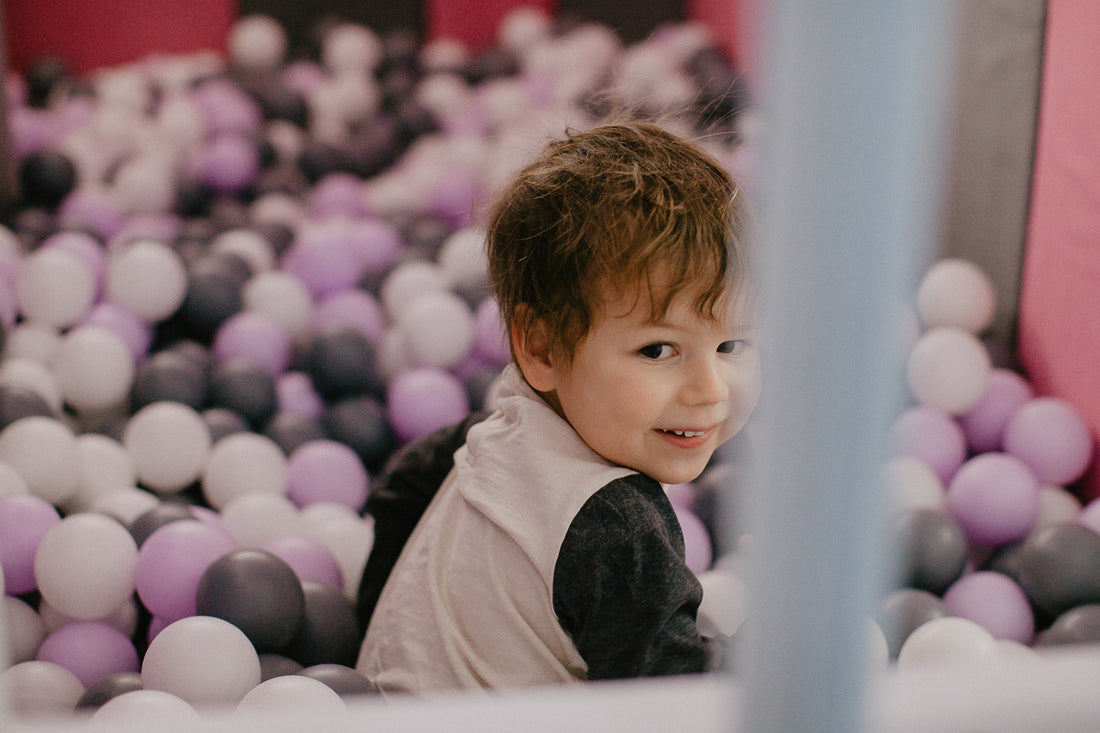
Ball Pit Safety for Kids: Tips, Checklist and UK Standards (2026)
Quick answer: A ball pit is safe for a young child when the balls are large (7cm is the size we recommend for under-3s, never smaller than 6cm), the balls are shallow enough that a seated baby stays chest-high above them, an adult stays close, and the pit and balls are checked and cleaned on a routine. In the UK, toys sold for children must meet the Toys (Safety) Regulations 2011, usually shown by testing to the EN 71 standard and a UKCA or CE mark. Commercial soft play frames fall under a separate standard, BS EN 1176.
At Soft Play Market the safety question we hear most is a practical one: "What do I actually need to check to keep my child safe in a ball pit?" This guide answers it for a ball pit at home and the ball pit at a soft play centre or nursery. It covers ball size, depth by age, the pit itself, the UK safety standards that apply, and a checklist you can use before each session.
What are the most important ball pit safety tips?
- Supervise every session. Stay within arm's reach of a baby and keep a toddler in sight the whole time.
- Use the right ball size. Never smaller than 6cm for under-3s. We recommend 7cm balls for babies and toddlers.
- Keep the balls shallow for little ones. A seated baby should have their chest, arms and head well clear of the balls.
- Check the balls. Take out any that are cracked, split or squashed flat. Broken plastic can have sharp edges.
- Check the pit. Look for split seams, exposed foam and zips that won't close.
- Nothing else in the pit. No food, drinks, dummies on cords, hair clips, small toys or shoes.
- One age group at a time. Don't let older children jump into a pit where a baby is sitting.
- Keep it clean. Wash the balls on a routine that matches how often the pit is used, and straight away after sickness, a nappy leak or a spill.
- Clear the space around it. Keep the pit away from radiators, hard furniture edges, stairs and blind cords.
What size should ball pit balls be for babies and toddlers?
Ball size is the single biggest safety feature of the balls themselves. Children under 3 explore with their mouths, so a ball needs to be far too big to fit in or block the mouth or throat. We never recommend balls smaller than 6cm for under-3s. Every ball we sell is 7cm, which gives a comfortable margin above that.
When you compare balls for a young child, check four things:
- Diameter: clearly stated as 7cm, not "approx. 5–7cm".
- Material: our commercial 7cm balls are made in the EU from flexible plastic with no PVC, BPA or phthalates.
- Testing: our commercial balls are tested to EN 71, the European toy safety standard series. More on what that covers below.
- Wall thickness: a ball that crushes flat under light pressure is more likely to crack. Thicker balls keep their shape and spring back when squeezed.
Glow-in-the-dark balls, bouncy rubber balls and novelty balls are not covered here. If you buy any ball for a child under 3, check the size and the safety marking before anything else.
How deep should the balls be at each age?
Depth matters as much as ball size. A baby who tips forward into a deep pit can struggle to push back up, so keep the fill low for the youngest children and add balls as they grow. Always check the age guidance on the product you buy, because it varies between pits. Some of our pits are listed for children over 12 months who can already sit on their own.
| Age | Ball depth | Supervision | Main things to watch |
|---|---|---|---|
| Under 12 months (only once sitting steadily, with support close by) | Very shallow, no higher than the waist when seated | Adult within arm's reach, all the time | Tipping forward, balls in the mouth, slumping face-down |
| 1–2 years | Up to waist height when standing | Within a few steps, eyes on | Climbing over the wall, falls, chewing balls |
| 2–4 years | A fuller pit is fine | Same room, watching | Jumping in, diving, rough play with siblings |
| 4+ years | Full pit | Nearby | Throwing balls at faces, burying younger children |
For a 90cm round pit, 200 balls gives a fairly shallow fill, which suits a baby or young toddler. Our guide on how to supervise a baby in a ball pit goes through each stage in more detail.
What makes the ball pit itself safe?
A ball pit for babies and toddlers should have soft, padded walls and a cushioned base, with no hard frame, poles or inflatable sides that can roll. A foam pit with a removable cover is the easiest to keep safe at home: the walls give when a child leans or falls on them, and the cover comes off to wash.
The foam pits we sell have polyurethane foam walls 5cm thick and a 2cm foam base, a zipped cover that machine-washes at 30°C, and a 30cm wall height, which is low enough for a toddler to climb out without a long drop. When you compare pits, look for:
- Low walls, around 30cm, rather than tall sides a toddler will try to climb over
- A padded floor, so a seated baby isn't sitting on a hard floor under the balls
- Walls firm enough to hold their shape, so the pit doesn't collapse when a child leans on it
- Zips that close fully and sit where small fingers can't easily open them
- No ties, cords or loose decorations
 Aesthetic Round Ball Pit with 200 Balls, 90x30cm, Khaki
£149.95
View product
 Bearly Round Ball Pit with 200 Balls, 90x30cm, Creme
£173.95
View product
 Soft Jersey Ball Pit with 200 Balls - Baby & Kids Play Gift - 90cm
£127.15
View product
Which safety standards apply to ball pits and ball pit balls in the UK?
Two different sets of rules apply, depending on whether you're buying a toy for home or equipping a commercial play area.
Home ball pits and balls are toys. In Great Britain, toys must meet the Toys (Safety) Regulations 2011, and the maker or importer must be able to show that. In practice they do it by testing to the EN 71 series and marking the product UKCA or CE. The parts most relevant to ball pits are:
- EN 71-1 (mechanical and physical properties): sharp edges, strength, and the small-parts test for toys meant for children under 36 months.
- EN 71-2 (flammability): how fabric covers and other materials behave near a flame.
- EN 71-3 (migration of certain elements): limits on metals such as lead that could transfer from the material to a child.
Commercial soft play is playground equipment. Enclosed soft play frames in play centres are covered by BS EN 1176, with Part 10 for fully enclosed play equipment, and BS EN 1177 deals with impact-absorbing surfacing. Venues also have a general duty under the Health and Safety at Work etc. Act 1974 to manage risks to visitors, which is why most book a regular independent inspection. These standards apply to the structure, not to a ball pit you buy for your living room.
| Home ball pit | Commercial soft play | |
|---|---|---|
| Main rules | Toys (Safety) Regulations 2011 | BS EN 1176 (Part 10 for enclosed play), BS EN 1177 for surfacing |
| How you can tell | EN 71 testing, UKCA or CE mark, seller name and UK or EU address | Installer's certificate and independent inspection reports |
| Who checks it day to day | The parent or carer | Venue staff, on a written routine |
| Balls | 7cm, toy-tested | 7cm, heavier-duty balls that keep their shape under heavy use |
For more on the commercial side, see our guide to safety standards for soft play equipment.
How do you check a ball pit before each session?
A quick check takes a couple of minutes and catches most problems before a child does. Use this list at home, or pin it up by the pit at a nursery or play centre.
Before every session
- Run your hands through the balls and pull out anything that isn't a ball
- Remove any cracked, split, dented or sticky balls
- Check the cover zip is closed and no foam is showing
- Check the floor around the pit is clear and not slippery
- Shoes off, pockets empty, hair clips and necklaces out
Every week (home) or every day (busy venue)
- Tip the balls out and check the base for crumbs, hair and lost items
- Wipe the inside of the cover or take it off to wash
- Look for small balls that have been mixed in from other toys
Every month or so
- Wash the full set of balls
- Squeeze-test a handful: replace any that stay dented
- Check the foam walls still hold their shape
What should you do when a new ball pit arrives?
- Unpack it away from the child and get rid of all plastic wrapping and bags straight away.
- Let the foam recover. Compressed foam can take a little while to return to full shape. Give it space before you fill it.
- Check every seam and the zip before the first use.
- Wash the balls before first use. Warm soapy water works, or a laundry net bag on a cool dishwasher cycle. Dry them fully before they go back in the pit.
- Fill shallow first. Start with fewer balls than you think and add more as your child gets steadier.
- Keep the packaging details showing the product name, seller and safety marking, in case you need them later.
For a full cleaning routine, read how to stop germs and allergens in baby ball pits.
What ball pit rules work at a soft play centre or nursery?
In a shared pit, most of the risk comes from other children and from hygiene. Short rules on a sign by the pit help staff and parents:
- Shoes off, socks on
- No diving or jumping in head first
- No throwing balls
- No food, drinks or toys in the pit
- Under-3s in the toddler area only
- Tell a member of staff about broken balls or anything left in the pit
Staff should sweep through the pit regularly to find lost items and broken balls, and keep a written cleaning log. Venues that replace balls in bulk usually buy them by the box: our bulk ball pit balls page lists the box prices for nurseries and play centres.
What are the red flags in a ball pit?
- Balls that are cracked, sticky, faded or smell musty
- Smaller balls mixed in with standard ones
- Food, wrappers or hair at the bottom of the pit
- Torn covers with foam showing
- Balls with no stated size, material or safety marking, and no seller address
- Older children playing rough in a pit with babies
If you see these at a venue, tell the staff. At home, take damaged balls out and replace them. You don't need to replace the whole set unless lots are damaged.
 Ball Pit Balls - 7 CM - 750 PCS - Commercial Grade - Choose Your Colour - Non-PVC Plastic - Non-Toxic and BPA Free - Premium Quality
£142.50
View product
 800 PCS 7 CM Multi-Colour Ball Pit Balls - Durable & Non-Toxic
£178.80
View product
 Aesthetic Round Ball Pit without Balls, 90x30cm, Khaki
£120.95
View product
What can't a safety standard do?
A UKCA or CE mark and EN 71 testing tell you the product met the requirements when it was made. They don't tell you the balls are still in good condition after a year of use, and they can't replace an adult watching. Most of the risks in this guide come from how a pit is used: too many balls for a baby, older children jumping in, or small objects left inside. Supervision, the right depth and regular checks do more for safety day to day than any label.
If you want to know more about what the balls are made of and whether they can be recycled, see what ball pit balls are made of.
Frequently asked questions
What age can a baby go in a ball pit?
Only once your baby can sit steadily, with the balls kept very shallow and an adult right beside them. Check the age on the product, as some pits are listed from 12 months.
Are ball pits a choking risk?
7cm balls are too large for a young child to swallow. The choking risk comes from small objects that end up in the pit, broken pieces of ball, and balls smaller than they should be. Sweep the pit before each session.
Do ball pit balls need to be EN 71 tested?
Balls sold as toys in the UK must meet the Toys (Safety) Regulations 2011, and EN 71 testing is the usual way to show it. Our commercial 7cm balls are EN 71 tested.
Does a home ball pit need to meet BS EN 1176?
No. BS EN 1176 is for playground and commercial play equipment. A home ball pit is a toy and falls under the toy safety rules.
How often should ball pit balls be replaced?
There is no fixed date. Replace balls when they crack, stay dented after a squeeze or can't be cleaned properly. In a busy commercial pit that happens much sooner than at home.
Can a dog use a child's ball pit?
We don't recommend it. A dog's teeth can crack the balls and leave sharp pieces, so keep pet and child ball pits separate.